Short answer: Harness or collar? For many dogs, a well-fitted harness is a comfortable, safe choice for walks, and a flat collar is best for ID tags and as a backup. Neither one teaches your dog to stop pulling; that takes reward-based training.
Why do many people choose a harness for walks?
Dogs Trust says harnesses can reduce the risk of neck injury and make walks more comfortable, though you still need to teach walking nicely on the leash. Choose carefully: avoid designs with a strap straight across the front of the shoulders that can restrict natural movement.
When is a collar the right choice?
Battersea describes a flat collar as a simple, safe choice for most dogs, and it's a good place for ID. If your dog pulls, a harness takes pressure off the neck. If you're unsure what suits your dog, ask your vet, especially if they have neck, back or breathing issues.
How should a harness and collar fit?
You should be able to slide a finger between the harness strap and your dog's body. It shouldn't shift as your dog moves, and your dog shouldn't be able to back out of it; see dog backs out of the harness. A flat collar should be snug, with about two fingers' space between collar and neck, according to Battersea. Check gear regularly for wear.
How do I get my dog used to a harness, step by step?
- Put it on the floor. Scatter treats around it and let your dog explore.
- Feed through the head opening. Hold the harness up and offer treats through it, so your dog chooses to put their head in.
- Add one step at a time. Briefly rest it on their back, then fasten one clip, rewarding as you go.
- Keep sessions short. Stop while your dog is still relaxed.
- Try a different style if needed. Dogs who dislike things over their head may do better with a harness that clips around the neck and body.
- Practice before walks. Let your dog wear it around the house for short periods first. For puppies, see puppy harness first steps.
Will a harness stop my dog pulling?
Equipment manages; training changes behavior. A harness can make pulling less hard on the neck, but it won't remove the habit. Teach your dog that a slack leash moves the walk forward; see how to start loose-leash walking.
When should I get help?
If your dog is scared of the harness, freezes, or tries to get away when you handle them, ask a qualified reward-based trainer for help and have your vet check for pain.
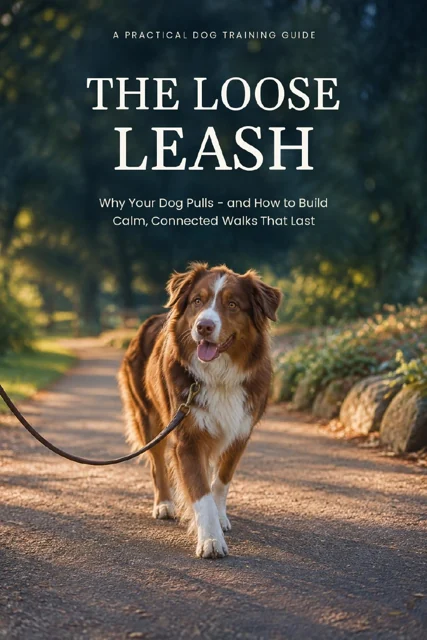
Gear helps, but training does the teaching. The Loose Leash guide covers walks without pulling step by step, and the first chapter is free to read.
This article is general education, not veterinary advice. If your dog seems unwell, is in pain, or something changed suddenly, call your vet. If it could be an emergency, don't wait.
Does one of these sound like yours?
Choose what fits. Nothing is saved or submitted.
Sources
Sources & care notes
Frequently asked questions
Is a harness or collar better for my dog?
For many dogs, a well-fitted harness is a comfortable, safe choice for walks, and a flat collar is for ID and as a backup.
How should a harness fit?
You should fit a finger between the strap and the body, it shouldn't shift as your dog moves, and your dog shouldn't be able to slip out.
How do I introduce a harness?
Put it on the floor, scatter treats around it and let your dog explore. Add each step slowly and reward as you go.
Does a harness or collar stop pulling?
No. Neither teaches your dog to walk without pulling. That takes training.
What if my dog is scared of the harness?
Slow down, try a different style, and ask a qualified reward-based trainer. Have your vet check for pain too.