Short answer: When another dog approaches on a walk, look for an exit and use it early: cross the street, turn down a side path, or step behind a parked car before your dog is fully focused on the other dog. Keep a secure, loose hold on the leash, skip the greeting, and add distance until your dog can turn with you or take a treat again.
Why does my dog struggle when another dog approaches?
Dogs Trust describes reactivity as a heightened emotional response that can come from fear, frustration, overwhelm, pain or other causes. A bark or lunge tells you your dog is struggling right now, not which emotion is underneath. Start with safety and space; look into the pattern later.
What should I do in the moment, step by step?
- Spot the exit. A side path, a driveway, a parked car or room to cross safely.
- Turn calmly and early. Before your dog is absorbed in the other dog.
- Hold the leash securely, not tightly. Avoid adding tension.
- Check what your dog can do. Can they turn with you, take food or look back at you? If not, add distance rather than repeating cues louder.
- Stay safe. Don't step into traffic or put yourself between two dogs if that's unsafe.
- If the other dog is off leash, prioritize separation and ask the handler to call their dog, while you keep your exit in view.
Is turning away rewarding my dog's barking?
No. Creating distance keeps your dog below threshold, where learning is possible. See reactive dog threshold.
How do I prepare for next time?
After the walk, note the trigger, distance, route, body language and what helped. Patterns can reveal quieter times and wider routes for planned practice. Stress also builds up; see trigger stacking. For persistent or intense reactions, work with your vet and a qualified behavior professional, since pain or illness can play a part.
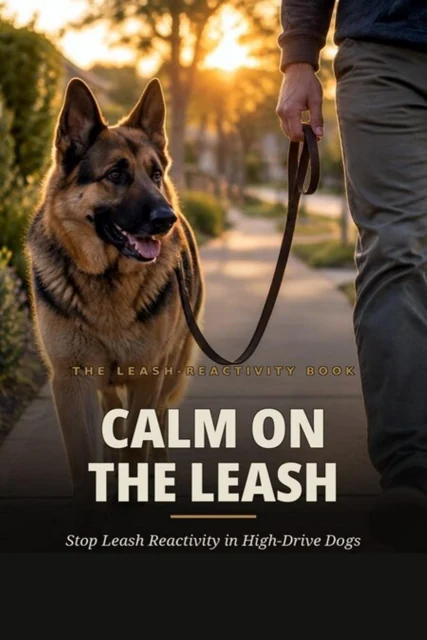
For a longer plan around seeing other dogs on walks, the Calm on the Leash guide builds on making space before your dog needs to bark. The first chapter is free to read.
Which part is hardest?
Choose what fits. Nothing is saved or submitted.
Sources & care notes
Sources: Dogs Trust, reactive dogs. VCA Animal Hospitals, aggression toward unfamiliar dogs: treatment.
This article is general education, not veterinary advice. If your dog seems unwell, is in pain, or something changed suddenly, call your vet. If it could be an emergency, do not wait.
Frequently asked questions
Should I let my dog greet a dog that approaches?
Not by default. Choose distance first; a greeting is something to add only when both dogs stay relaxed.
What if the other dog is off leash?
Prioritize separation and ask the handler to call their dog, while you keep an exit in view.
How do I know we're too close?
If your dog stops eating, freezes or fixes on the other dog, add distance rather than repeating the cue.
Is turning away rewarding the barking?
No. It keeps your dog below threshold, where learning stays possible.
Should I ask my dog to sit as the dog passes?
Usually not. Calmly moving away is often easier for your dog than holding a sit under pressure.