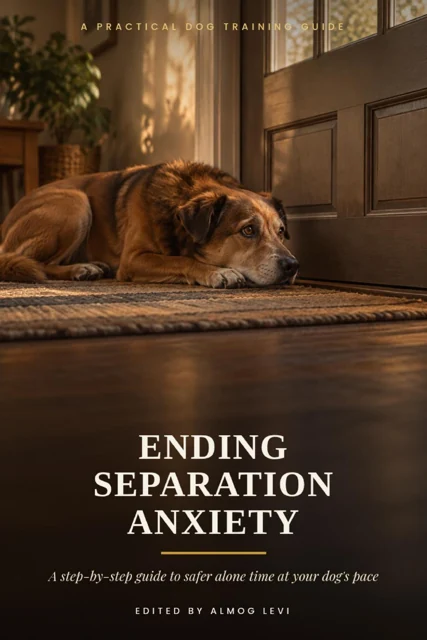
Short answer: Dog separation anxiety is distress about being apart from a person your dog is attached to, and it can show as barking, howling, pacing, drooling, damage near doors or windows, or toileting indoors when left. These signs can have other causes, so start with a vet check, then use very gradual, comfortable absences and arrange company for the times you must leave. Don't leave a frightened dog to cry it out.
What are the signs of separation anxiety in dogs?
Your dog may get unsettled when you pick up your keys or put on your shoes. After you leave, they may whine, howl, pace, pant, tremble, drool or scratch at the door. Some dogs stop eating. Others go quiet and withdrawn rather than noisy.
Is it separation anxiety or something else?
Barking or a chewed cushion alone doesn't confirm separation anxiety. Hallway noises, boredom, trouble with confinement and unfinished house training can look similar. Medical problems can also cause indoor accidents or behavior changes, especially in an older dog. That's why a vet visit comes first. See also anxiety or boredom?
Write down what happens before and during departures, and share the pattern with your vet. Use footage you already have, or a camera during a short absence you know your dog can handle. Don't extend an absence to find the point of panic.
What can I do about the times I have to leave?
Practice absences and a workday are different things. While you train, try to avoid absences longer than your dog can comfortably manage. A friend, family member or sitter may help if your dog is comfortable with them. A crate is not a treatment for separation anxiety; some dogs become more distressed in one and may injure themselves trying to get out.
What does a gradual separation anxiety plan look like, step by step?
This is a starting framework to discuss with your vet or a qualified behavior professional, not a fixed timetable. If your dog is already panicking, get help with the plan before practicing departures.
- Start with comfortable distance at home. Let your dog rest in a familiar spot while you stay nearby, and quietly reward relaxed resting.
- Make departure cues ordinary. Pick up your keys or shoes, put them down and carry on at home, until they stop predicting that you're leaving.
- Try an absence shorter than your dog's comfortable limit. It may start as a moment out of sight. Return before worry begins.
- Build only while your dog stays relaxed. Add a little time when they're coping, and mix in easier, shorter absences.
- Keep notes. Record the time and what your dog did, so the next step follows their response, not the calendar.
- Stop when worry appears. Return calmly, end that absence and make the next one easier. If there's sustained distress, pause and ask for help.
What should I not rely on?
Don't punish barking, damage or accidents when you get home. These can be signs of distress, and punishment can make the worry worse. A food toy can be part of the setup, but it isn't a full plan; a very worried dog may not eat, and an empty toy doesn't prove the whole absence was comfortable.
When should I get more help?
Contact your vet and a qualified behavior professional if your dog panics, tries hard to escape, can't manage even a very short separation, or isn't improving with an easy plan. If your dog is injured, stop practicing and call your vet. Some dogs benefit from medication alongside training; that's a decision for your vet, so don't start, change or stop medication on your own.
If you and your vet decide on a training plan, Ending Separation Anxiety walks through gradual alone-time practice in more detail. The first chapter is free to read.
Does one of these sound like yours?
Choose what fits. Nothing is saved or submitted.
Sources & care notes
Sources: VCA Animal Hospitals, separation anxiety in dogs. ASPCA, separation anxiety. Dogs Trust, separation anxiety. Dogs Trust, time-alone training. Blue Cross, home alone. Merck Veterinary Manual, behavior problems in dogs.
This article is general education, not veterinary advice. If your dog seems unwell, is in pain, or something changed suddenly, call your vet. If it could be an emergency, do not wait.
Frequently asked questions
What are the signs of separation anxiety in dogs?
Barking, howling, pacing, drooling, damage near exits or toileting indoors when alone, often starting as you pick up keys or put on shoes.
Does barking or a chewed cushion confirm separation anxiety?
No. Noises, boredom, confinement stress and unfinished house training can look similar, and medical problems can contribute, so check with your vet.
What should I record?
What happens before and during departures, using footage you already have or a camera during a short absence your dog can already handle.
Should I crate a dog with separation anxiety?
A crate isn't a treatment, and some dogs get more distressed in one. Choose a safe, familiar resting area and ask your vet or a behavior professional.
Will my dog need medication for separation anxiety?
Some dogs do benefit from medication alongside training, but only your vet can decide that. Don't start or change medication yourself.