Short answer: When a dog freezes and stares at another dog, it's often the last quiet step before barking or lunging, a sign the situation is already too close. Don't wait to see what happens: calmly create space by crossing the street, turning down another path or putting a barrier between the dogs. Then, on quieter routes, reward your dog for looking at dogs from a distance where they stay loose.
What does freezing and staring mean?
A dog may freeze because of fear, frustration or high arousal. You don't need to know which in the moment; the freeze tells you to add distance. A sudden change in behavior deserves a vet check.
What should I do in the moment, step by step?
- Notice the freeze. Body tightens, leash shortens, eyes lock on.
- Make space calmly. Cross the street if safe, take another path or step behind a parked car.
- Skip the greeting. Don't let an on-leash meeting "work it out," especially if either dog can't move away.
- Hold the leash securely. Use a well-fitting harness and a leash you can handle.
- Leave if your dog locks on. You're already too close for training; focus on leaving safely.
How do I build calmer walks, step by step?
- Find the easier distance. On a quiet route, notice how far away another dog can be while yours can still sniff, eat and turn toward you. See reactive dog threshold.
- Reward calm looking. Your dog sees the dog, you reward, then you move away.
- Practice a cheerful U-turn. Rehearse it without triggers so it's easy when a dog appears.
- Keep notes. Track distances, places and what helped.
When should I get help?
If your dog has bitten, is hard to control, or your routes have no safe escape, get help from a qualified reward-based behavior professional.
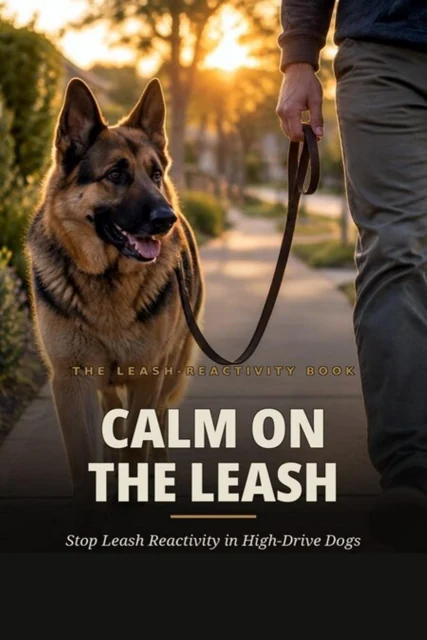
For a longer plan on noticing other dogs without a lunge, the Calm on the Leash guide goes step by step. The first chapter is free to read.
Does one of these sound like yours?
Choose what fits. Nothing is saved or submitted.
Sources & care notes
Sources: Dogs Trust, reactive dogs. Dogs Trust, understanding your dog's body language.
A sudden change in behavior can have a medical cause. If something feels off, check with your vet first.
Frequently asked questions
Why does my dog freeze and stare before lunging?
The freeze is often the last quiet step before barking or lunging. It can come from fear, frustration or high arousal.
What should I do in the moment?
Create space calmly: cross the street if safe, take another path or put a visual barrier between the dogs.
How do I build calmer walks?
On a quieter route, reward your dog for seeing another dog at a distance where they can still sniff, eat and turn toward you.
Should I let my dog greet the dog they're staring at?
No. Skip on-leash greetings, especially when either dog can't move away.
Is a freeze always a bad sign?
It's information. It tells you the situation is getting too close, so add distance before it escalates.