Short answer: When your dog lunges and barks at other dogs on leash, create space early: turn away, cross, or step behind a parked car before your dog is overwhelmed, and skip forced greetings or close passes. Move away calmly if your dog reacts, without punishment. Then practice separately, at a distance where your dog can notice other dogs and still take food, so the trigger starts to mean something better.
Why does my dog lunge at other dogs on leash?
Fear, frustration, excitement or health factors can all play a part, and the behavior alone doesn't tell you which. The leash removes your dog's option to move away or greet naturally. See why dogs bark and lunge on leash and reactive only on leash.
What should I do when another dog appears, step by step?
- Scan ahead. Choose routes with clear sightlines and exits.
- Turn early. Move away or use a visual barrier before your dog fixes on the other dog.
- Skip the close pass. Don't force your dog through a narrow gap or into a greeting.
- Reward at a manageable distance. If your dog can still take food, reward them for noticing, then move on. Don't use food to lure them closer.
- If they react, leave. Move away calmly and prioritize safety. Don't punish the reaction.
- Plan what to say. A ready phrase for people who want to approach helps. See words to use when someone wants to approach.
How do I practice for future encounters?
Practice is separate from everyday walks. Desensitization uses gradual, manageable exposure, and counterconditioning pairs the trigger with something good. Both need a controlled setup; see how to run a first session and finding a workable distance.
What equipment is best for a reactive dog?
Choose secure, comfortable equipment suited to your dog and your handling, with qualified guidance if safety is uncertain. AVSAB advises against aversive tools and leash corrections. No product replaces a plan.
When should I get help?
Sudden changes, bites, redirected biting or unsafe handling need your vet and a qualified reward-based behavior professional before more planned encounters.
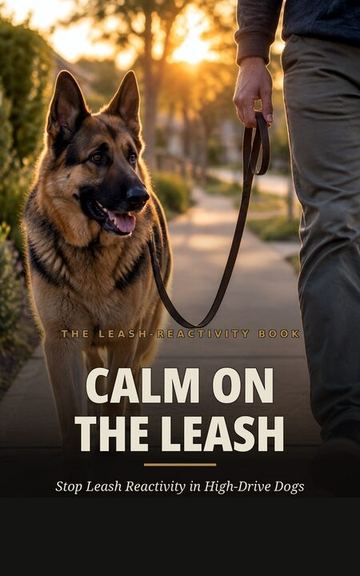
For broader reading on walks that become overwhelming, the Calm on the Leash guide lays out a step-by-step plan. The first chapter is free to read.
This article is general education, not veterinary advice. If your dog seems unwell, is in pain, or something changed suddenly, call your vet. If it could be an emergency, don't wait.
Frequently asked questions
Is leash reactivity the same as aggression?
Not necessarily. Fear, frustration, excitement or health factors can contribute. Take any risk of injury seriously and get help.
Does loose-leash walking help with reactivity?
It's a useful walking skill, but changing how your dog feels about other dogs is a different goal that needs its own practice.
What equipment is best for a reactive dog?
Secure, comfortable gear suited to your dog, with guidance if safety is uncertain. Avoid aversive tools and corrections.
Will leash reactivity go away on its own?
Don't rely on that. Many dogs improve with support, and some continue to need management.
Should I make my dog sit while another dog passes?
Usually not. Moving away to create space is often kinder and safer.
Sources
Checked 12 November 2026. This date records source checks, not an expert-review credential.
[1] Dogs Trust, reactive dogs: https://www.dogstrust.org.uk/dog-advice/training/unwanted-behaviours/reactive-dog
[2] VCA Animal Hospitals, desensitization and counterconditioning: https://vcahospitals.com/know-your-pet/overcoming-fears-with-desensitization-and-counterconditioning
[3] AVSAB, humane training position statements: https://avsab.org/resources/position-statements/
[4] RSPCA, dog body language: https://www.rspca.org.uk/adviceandwelfare/pets/dogs/behaviour/understanding
[5] Dogs Trust, positive reinforcement: https://www.dogstrust.org.uk/dog-advice/training/techniques/positive-reinforcement-training-with-rewards
Does one of these sound like yours?
Choose what fits. Nothing is saved or submitted.